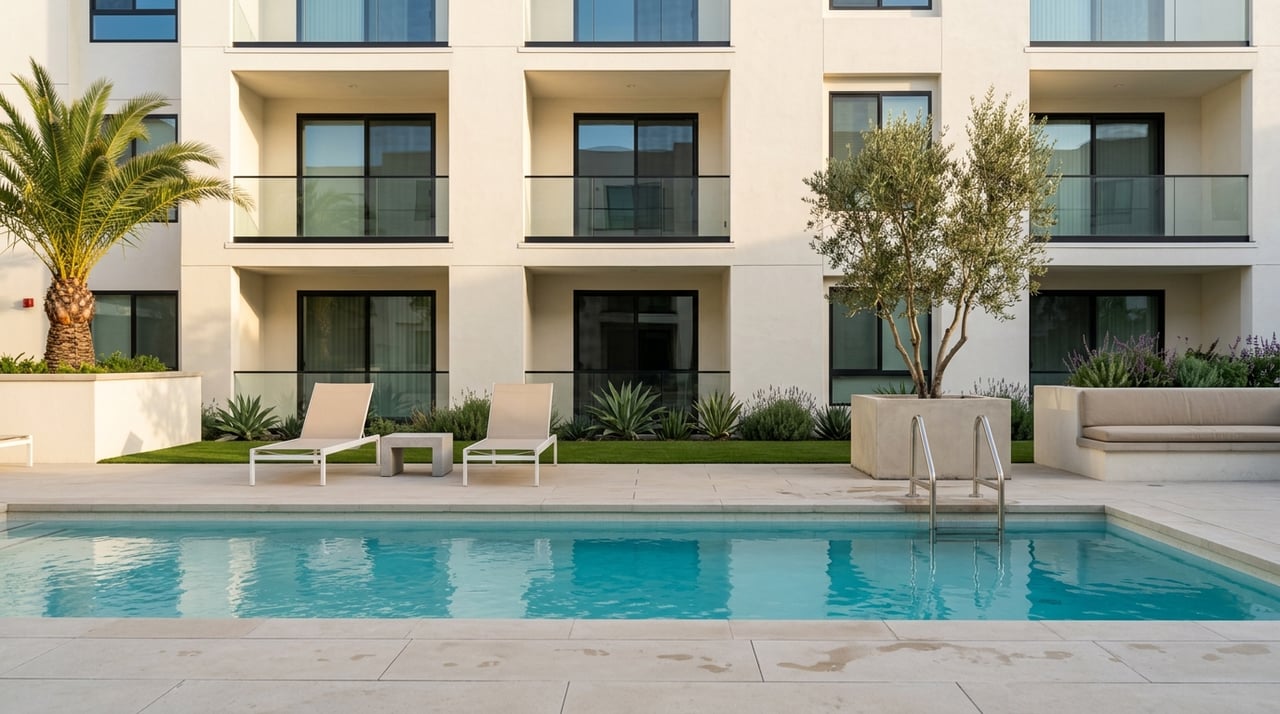
Wondering if condo living in Mission Valley can really work as your family grows? If you love the idea of a central San Diego location but worry about space, storage, and daily routines, you are not alone. The good news is that Mission Valley offers a very specific kind of family lifestyle, one built around convenience, transit access, parks, and amenity-driven living. Let’s take a closer look at what that can mean for you.
Why Mission Valley Appeals to Growing Families
Mission Valley sits near the geographic center of San Diego and functions as a regional hub for shopping, offices, hotels, transit, and housing. The City of San Diego also describes it as an urban center connected by the Trolley, with growing residential uses throughout the area. For many families, that central location can make everyday life feel more manageable.
If you are balancing work, school drop-offs, errands, and weekend plans, Mission Valley can simplify the map. Instead of planning your life around long drives between neighborhoods, you may find that more of your routine happens close to home. That convenience is often one of the biggest reasons families consider a condo here.
The area’s long-term planning also supports this lifestyle. The Mission Valley community plan update emphasizes mixed-use housing, public spaces, pocket parks, trails, joint-use facilities, and better walking, biking, and transit connections. In practical terms, that points to a neighborhood designed for a more connected and compact way of living.
What Daily Life Can Look Like
Living in a Mission Valley condo often means trading a large yard for easier access to amenities. For some families, that trade feels worth it because everyday needs can be handled more efficiently. When your schedule is full, convenience matters.
A typical week might include a quick grocery or shopping run, a stroller walk along the river, and a weekend stop at a nearby park or farmers market. You may also have the option to mix driving with trolley trips, depending on where you work and what your day looks like. That flexibility is a major part of Mission Valley’s appeal.
This does not mean every condo community feels the same. Some buildings may feel more tucked away, while others are closer to shopping, transit, or busier roads. That is why it helps to think beyond the unit itself and consider how the surrounding area supports your family’s routine.
Parks and Outdoor Time in Mission Valley
For families with young children, easy outdoor access can make condo living much more comfortable. Mission Valley’s strongest lifestyle feature is the San Diego River corridor, which gives residents nearby space to walk, bike, and spend time outside without needing a full day plan.
The City says the Mission Valley Preserve includes 52 acres of San Diego River parkland. The San Diego River Park Foundation adds that the preserve includes native habitat, a native plant garden, and interpretive areas. That kind of setting can be a great fit when you want a simple outing that does not require a long drive.
The foundation also describes a paved 2-3/4-mile trail segment between Highway 163 and Qualcomm Way. It is suited for walking, biking, bird watching, and casual outdoor time. For a growing family, that can translate into stroller walks, scooter rides, and low-key weekend routines that are easy to repeat.
Mission Valley also offers smaller neighborhood amenities that support family life. The City lists the Mission Valley Farmers Market at Civita Park every Saturday, which can turn a basic errand into part of your weekend routine. Short, repeatable outings like this often make condo living feel more livable for families.
Libraries, Errands, and Everyday Convenience
When you live in a condo, nearby public spaces matter. They give you options when you want to get out of the house without making a big production out of it. In Mission Valley, the local library is one of those useful everyday resources.
The Mission Valley Branch Library includes a children’s library, outdoor patio, meeting room, and MTS Green Line access. The City also describes it as one of its larger library branches at 19,760 square feet. For parents, that means another practical place for reading time, quiet afternoons, or a simple change of scenery.
Shopping convenience is also a major part of the Mission Valley lifestyle. Fashion Valley has over 200 stores and direct trolley and bus service at the Fashion Valley Transit Center. It also includes family-oriented features like a children’s play area, baby-changing stations, family restrooms, bike racks, and accessible parking.
That setup can make a big difference when you are managing family logistics. You may be able to combine errands, lunch, and a few kid-related needs into one stop instead of driving across several parts of San Diego. For busy households, that kind of efficiency is not small.
Transit Access for Busy Parents
One of Mission Valley’s biggest strengths is that transit is part of the neighborhood, not just an afterthought. MTS says the Green Line serves stations including Fashion Valley, Hazard Center, Mission Valley Center, Rio Vista, Fenton Parkway, Stadium, and Mission San Diego. The Green Line also runs about every 15 minutes from roughly 5 a.m. to 11:30 p.m. daily.
For parents, this can support a mixed routine. Some days may still be car-heavy, especially with pickups, groceries, or packed schedules. But on other days, trolley access may help with commuting, events, or getting around without dealing with as much parking stress.
MTS also identifies Mission Valley as a connection point to places like SDSU, Snapdragon Stadium, Old Town, Little Italy, and Downtown San Diego. If your family likes having access to more of the city without always driving end to end, that location can be a strong advantage.
Condo Trade-Offs to Think Through
Condo living can be a great fit for a growing family, but only if the numbers and the day-to-day details work for you. It is important to look beyond the listing photos and think carefully about how the property functions.
One of the biggest financial considerations is the HOA. HOA dues are usually separate from your mortgage payment, and costs can range from a few hundred dollars to more than $1,000 a month. Those dues should be part of your real monthly housing budget from the start.
HOA rules matter too. Rules and fees can affect how you use shared amenities, and dues may rise over time. If you are comparing condos, make sure you understand not just the monthly amount but also what the association covers and what limitations may affect your household.
Insurance is another detail that deserves close attention in Mission Valley. The City notes that the community lies in the San Diego River floodplain. Because of that, buyers should ask specific questions about flood risk, insurance needs, and whether separate flood insurance may be required for a given property.
It is also important to understand how condo insurance works. A homeowners association’s master policy may cover common areas, but owners often need their own policy for the interior of the unit. That distinction can affect both your monthly costs and your level of protection.
Space Matters More Than Square Footage
For a growing family, the best condo is not always the one with the biggest square footage number. What matters more is whether the home actually supports your daily routine. A well-laid-out condo can live much better than a larger unit with awkward storage or limited flexibility.
As you tour homes, focus on practical details like these:
- True bedroom count
- Closet depth
- Pantry space
- Linen storage
- In-unit laundry
- Stroller storage
- Bike storage
- Guest parking
- HOA rules that fit a busy household
These details can shape your quality of life far more than a sleek kitchen photo. If you plan to stay for several years, think about how the condo will function not just today, but as your family’s needs change.
School Boundaries Require an Address Check
If school assignment is part of your home search, verify it using the exact property address. San Diego Unified’s School Finder says parents should use the exact street address to confirm attendance boundaries. The district also notes that not every part of San Diego falls within SDUSD boundaries.
That means you should avoid making assumptions based on a condo’s general location in Mission Valley. Even homes that seem close together may not have the same assignment details. A careful address check is one of the simplest ways to avoid surprises later.
Is a Mission Valley Condo the Right Fit?
For many households, Mission Valley condo living works best when your priorities center on location, convenience, and access to amenities. If you want a more urban, connected lifestyle with parks, trails, shopping, and transit nearby, this area can check a lot of boxes. It can be especially appealing if you value flexibility in how you move through your day.
At the same time, condo living asks you to be thoughtful. You need to look closely at HOA costs, insurance questions, storage, layout, and how the building fits your family’s habits. The goal is not just to buy enough space, but to buy a home that truly supports the way you live.
If you are weighing whether Mission Valley makes sense for your next move, local guidance can help you compare options with more clarity. A calm, neighborhood-focused approach can make it easier to sort through trade-offs and find the right fit for your timeline, budget, and daily life. When you are ready to explore Mission Valley condos with patient, personalized support, connect with Patricia Casanova for bilingual guidance in English or Spanish.
FAQs
Is Mission Valley a convenient San Diego neighborhood for families?
- Mission Valley offers central access to shopping, transit, parks, and everyday amenities, which can make daily routines easier for many families.
What outdoor spaces can families enjoy in Mission Valley?
- Families can enjoy the Mission Valley Preserve, San Diego River parkland, and a paved 2-3/4-mile trail segment that supports walking, biking, and casual outdoor time.
What should buyers check before buying a Mission Valley condo?
- Buyers should review HOA dues and rules, insurance needs, flood-related questions, storage, layout, parking, and how the unit supports daily family routines.
Do Mission Valley condos have access to public transit?
- Yes, Mission Valley is served by the MTS Green Line, with multiple stations in and around the neighborhood and service running about every 15 minutes daily.
How can parents verify school assignment for a Mission Valley condo?
- Parents should use the exact property address in San Diego Unified’s School Finder because attendance boundaries can vary by address and not all areas fall within SDUSD.
Is condo living in Mission Valley good for a growing family?
- It can be a strong fit if you value location, convenience, transit access, and nearby amenities, and if the specific condo’s layout, storage, HOA structure, and costs match your family’s needs.