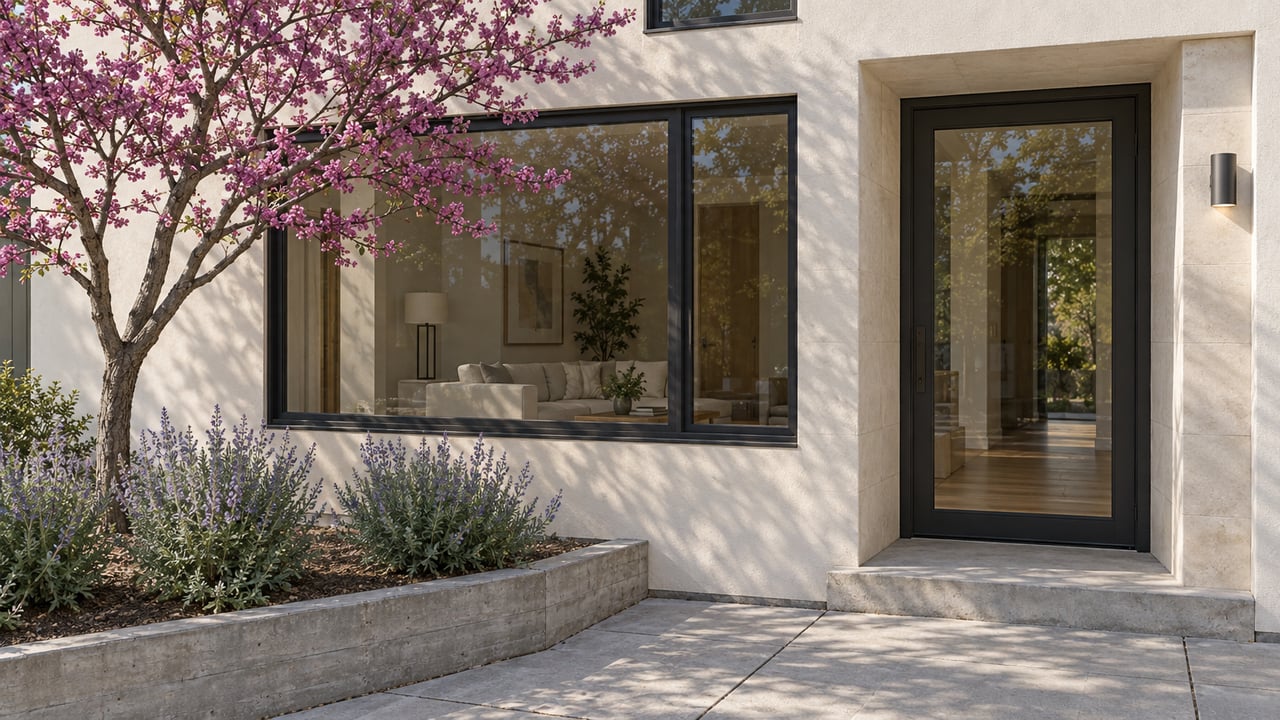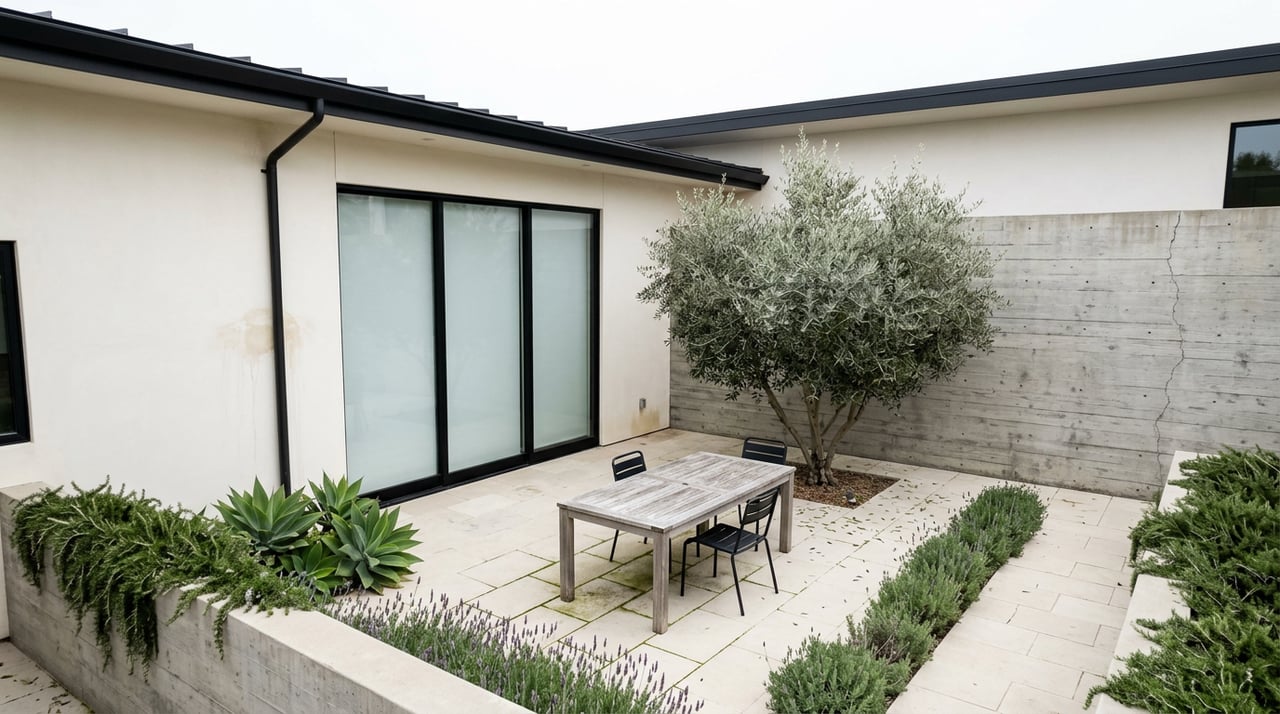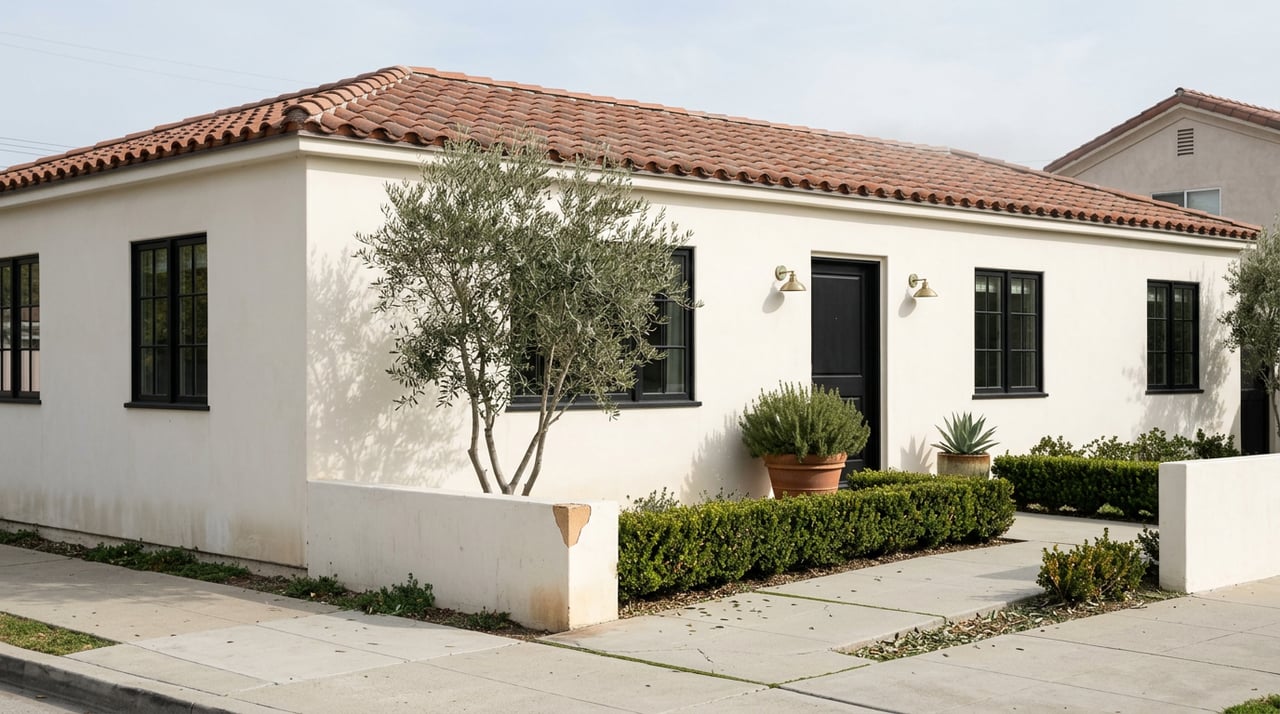
If you've been cross-shopping North Park and South Park, you've probably already run into the same number twice: North Park detached homes closing somewhere north of $1.1 million, South Park somewhere in the $800,000s. The story writes itself. South Park is the value play. North Park is the splurge.
That story is true for exactly one kind of buyer, and it quietly flips for another. If a condo is anywhere in your search, the neighborhood that looks like the deal on paper is actually the tighter, more competitive market right now, and the one that looks pricier has more room to negotiate than the headline suggests. The median everyone quotes is measuring the wrong property type for a lot of the people reading it.
The number everyone's looking at
Start with what's true. Using San Diego Association of Realtors data on closed transactions through February 2026, North Park's detached single-family median sat at $1,125,000, while South Park's detached median, reported under ZIP code 92102, came in at $806,000, up 7.5% year over year. Homes in that South Park ZIP were closing at 100.7% of list price in an average of 24 days, with just 2.1 months of inventory on hand. That's a seller's market by any conventional read, and it's roughly $320,000 cheaper than North Park's detached number using the same data source for both.
One catch worth knowing before you anchor to that $806,000 figure: South Park doesn't have its own ZIP code. It reports under 92102, shared with Golden Hill. Every South Park detached median you see blended in with Golden Hill sales, which means the number is real, but it's not purely South Park.
Why South Park's median won't sit still
Here's where it gets more interesting than a simple gap. Pull South Park's reported median from different points in the last eighteen months and you get numbers that don't just vary, they scatter. One estimate put the single-family median around $735,000. A different reading for the three months ending March 2026 put it near $1.3 million, with homes selling in an average of 11 days. Another spring 2026 snapshot landed closer to $1.4 million. These aren't typos or bad math. They're what happens when a small, tightly held neighborhood reports a median off a handful of closings each month.
South Park is a compact market. When three renovated Craftsman bungalows close in the same window, the median jumps. When a couple of smaller fixers close instead, it drops. A neighborhood-wide median in a market this size tells you less about "what South Park costs" and more about which specific handful of houses happened to sell that month. If you're using a single quoted median to size up your budget, you're borrowing more precision than the number actually has.
The part nobody's headline covers: condos move the opposite direction
This is the piece that changes the comparison. Look past detached homes and check the attached market, condos and townhomes, in both neighborhoods using the same SDAR window.
| North Park (92104) | South Park / Golden Hill (92102) | |
|---|---|---|
| Condo/townhome median | $495,000 | $487,500 |
| Year-over-year change | Roughly flat to up | Down 11.2% |
| Months of supply | 1.7 | 3.7 |
| Sale-to-list ratio | Competitive, near or above asking | 97.8% |
| Average days on market | Faster, often under 20 days | 31 days |
North Park and South Park condos are priced within $8,000 of each other. But North Park's condo market has 1.7 months of supply, which is tight enough that buyers are still competing for units. South Park's condo market has more than double that, at 3.7 months, and prices there are down over 11% year over year. That's not a rounding difference. It's two different markets wearing the same price tag.
If your budget points you toward a condo rather than a detached house, the "North Park is expensive, South Park is the deal" framing stops applying. On the attached side, South Park is currently the market where a buyer has room to negotiate on price, ask for concessions, or simply take more time. North Park's condo segment is behaving like the tight seller's market its reputation suggests. South Park's isn't.
What the price actually buys you on the ground
Both neighborhoods sell on walkability, and that part of the pitch holds up in both directions. South Park's commercial corridor runs along 30th Street, Fern Street, and Beech Street, and it's compact enough to park once and cover most of an evening on foot. Buona Forchetta, at 3001 Beech Street, has anchored that corner since 2011 with a wood-fired Neapolitan oven the restaurant named Sofia, and it picked up San Diego Magazine's Best Pizza, Critics' Choice award in 2023. A few blocks over, Kindred serves a fully vegan menu at 1503 30th Street, Piacere Mio does homey Italian trattoria fare on Fern Street, and Communal Coffee anchors the morning crowd two doors down from a flower shop it shares space with.
That corridor has also turned over recently, which matters if you're comparing neighborhood character rather than just square footage. Hamilton's Tavern, South Park Brewing, and Del Sur have all closed in the past year or so. That's not a knock on the neighborhood. It's a reminder that "best restaurants in South Park" lists compiled even a year ago are already out of date, and a walk-through beats a search result if the food scene is part of your decision.
North Park's version of this same walkability runs along 30th Street and University Avenue, with the added detail that parts of the neighborhood, specifically the Burlingame and Dryden Historic Districts, contain homes built between 1905 and 1940 that may qualify for Mills Act property tax savings of 40% to 60%. That's a real, dollar-figure incentive tied specifically to North Park's older housing stock, and it's worth asking about if a detached historic home there is on your list.
North Park is holding tight while the county loosens
One more piece of context, because it changes how urgently you should move if you're set on North Park specifically. San Diego County's overall housing inventory has been climbing through 2026, reaching roughly 6,400 active listings by mid-year with about 3.2 months of supply countywide, the loosest the county market has been since 2019. The county median sale price was around $1.02 million in July 2026, down slightly from a $1.05 million peak the month before.
North Park hasn't followed that pattern. It held at 2.0 months of supply for detached homes and 1.7 months for condos even as the broader county eased toward more balanced conditions. Part of the reason may be visible in the permitting data: the City of San Diego issued more than 500 development permits in North Park's planning area over the past year, including 126 for new apartment buildings with five or more units and 117 for accessory dwelling units. That's a meaningful supply pipeline, but it's mostly rental and ADU construction, not new detached inventory, so it hasn't loosened the for-sale market the way rising countywide inventory has elsewhere.
What this means if you're deciding right now
If you're comparing a detached home in each neighborhood, the roughly $300,000 gap using SDAR's February 2026 data is directionally real, even accounting for the Golden Hill overlap in South Park's reporting. If you're comparing condos, treat that same headline gap as close to meaningless. North Park's condo market is the one asking you to move fast and compete. South Park's is the one where you can take a longer look, negotiate credits, or wait for a price adjustment.
And if anyone quotes you a single South Park median as gospel, ask what months it covers and how many homes closed in that window. In a market this size, that context matters more than the number itself.
A couple of things buyers ask
Does South Park actually have condos, or is it mostly single-family homes? Both exist, but detached Craftsman and Spanish Colonial Revival homes make up most of the housing stock in the historic district. Condos and townhomes are a smaller share of the market, which is part of why that segment's median can swing when just a few units close in a given month.
Why does South Park report under Golden Hill's ZIP code? South Park shares ZIP 92102 with Golden Hill, so any detached-home statistic pulled at the ZIP level blends both neighborhoods. Buyers who want a South Park-only read need block-by-block comps rather than a ZIP-wide median.
Numbers like these change month to month, and the right comparison depends on whether you're chasing a bungalow, a condo, or something in between. If you want a plain-language walk through current North Park and South Park comps for your specific budget, reach out to Patricia Casanova. Consulta en español disponible.